June 2026: From Tokenized to Composable, Making Onchain Assets Actually Work
Published • 1 Jul 2026
4 mins
.jpg%3Fprefix%3Dmedia&w=3840&q=75)
We spent June hammering a single point: putting a real-world asset onchain is only step one. The value shows up when that asset can be posted as collateral and put to work. Tokenized assets → composable assets — that's the phase we're building for, with USDf on the crypto-native side and fUSD on the regulated institutional side. Different rails, same direction: making onchain dollars, and the assets behind them, more useful.
USDf & sUSDf Updates
As of the Transparency Dashboard capture on July 1, USDf supply sits at $1.26 billion, with $63.51 million in sUSDf. Total reserves are $1.3 billion, putting our backing ratio at 103.32%. sUSDf is delivering 4.71% APY, supported by a $10 million insurance fund and HT Digital's latest attestation dated June 29.
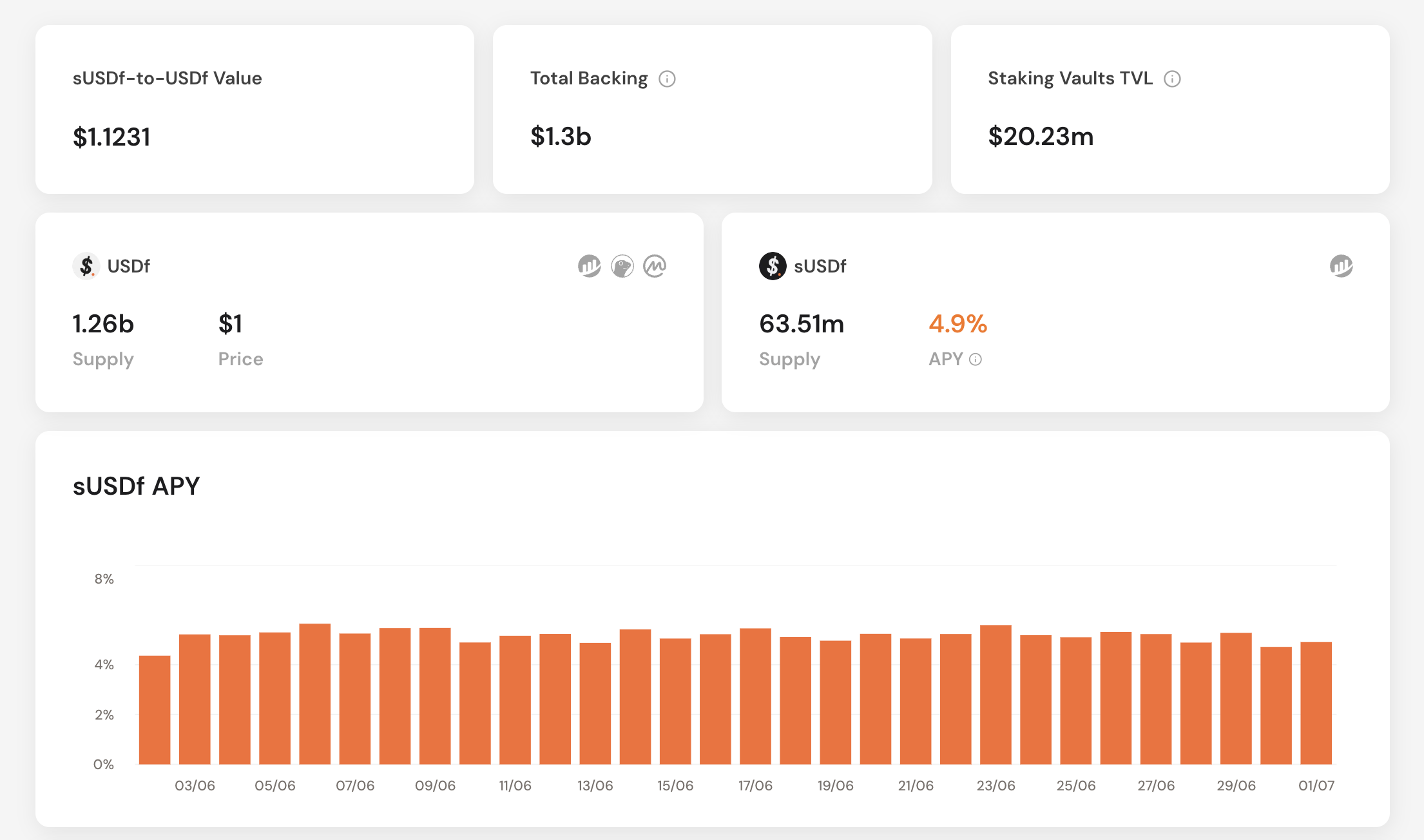
- Reserve exposure remains led by BTC at 64% ($834.12 million), followed by mBTC at 14.5% and enzoBTC at 14.2%.
- Yield generation is still anchored by options-based strategies at 61%, with positive funding farming and staking at 21%, and smaller contributions from statistical and cross-exchange arbitrage.
Key Themes in June
Tokenized stocks, now working as collateral for USDf
The theme we came back to all month: a tokenized stock idle in a wallet isn't doing much. The value shows up when it can be posted as collateral. Supported tokenized equities from Ondo Global Markets and xStocks can already be used to mint USDf, turning static exposure into working capital.
By month-end we made the point concrete with NVIDIA: you can mint USDf against both NVDAon (Ondo) and NVDAX (xStocks). One underlying stock, two tokenized representations, both usable as onchain collateral. That's the difference between owning exposure and being able to do something with it.
Falcon Staking Vaults for tokenized assets
Price exposure is only the first layer; the bigger unlock is making tokenized assets productive. That's what Falcon Staking Vaults are built for, taking assets like XAUt (gold) and SPYx (S&P 500) and turning passive holdings into yield-bearing onchain positions. Commodities and equities shouldn't just sit there tracking a price. They should be able to earn.
Two dollar rails, one direction
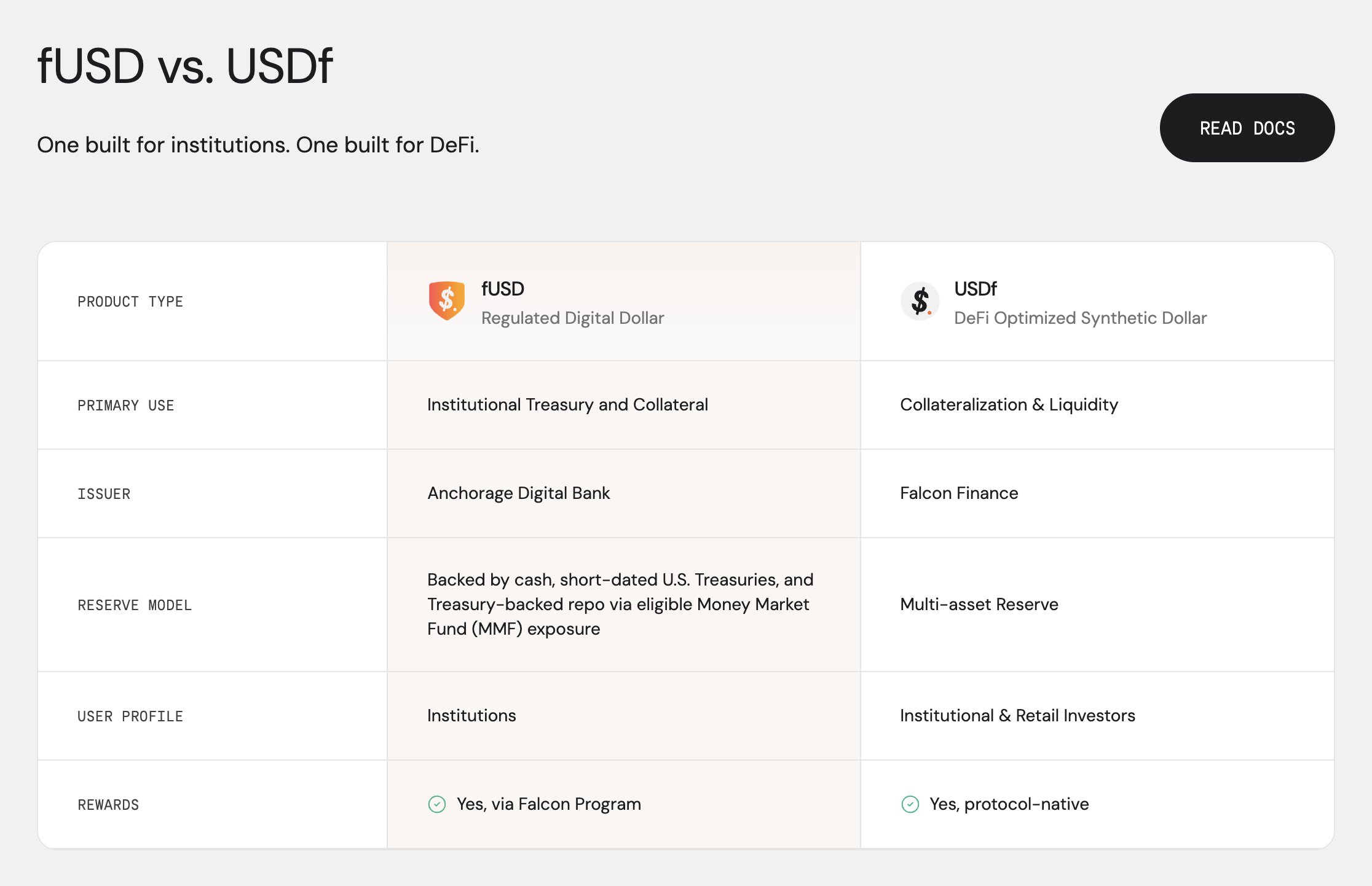
USDf is our overcollateralized, crypto-native synthetic dollar, backed by RWAs and select crypto, stake it, earn yield. fUSD is issued by Anchorage Digital Bank, attested monthly by Deloitte, custodied off-exchange via Ceffu, and backed by cash and T-bills, with qualifying institutions earning roughly 3% a year through Falcon's separate rewards program.
DeFi wants composability; institutions want regulated rails, clear custody, and clean reward structures. The two products are designed to coexist and serve fundamentally different users, as the next phase of stablecoins won't be one-size-fits-all.
Ecosystem Growth and Partnerships
Ondo and xStocks tokenized assets as collateral
The collateral story runs through our integrations. Ondo Global Markets and xStocks are where the tokenized equities live; Falcon is where they become productive. Tokenized stocks crossed $2.76 billion across 100+ stocks this year, up 789% in twelve months, and the more of that supply that can be posted as collateral, the more useful the whole category gets.
Insights, Media and AMAs
Andrei Grachev on why Falcon runs two rails
Andrei Grachev spent June making the strategy clear across several interviews: USDf is the crypto-native synthetic dollar backed by crypto and RWA collateral with yield from diversified strategies, while fUSD is the Anchorage-issued, Treasury-backed dollar built for institutions that need compliant collateral and transparent reserves. He carried the same message to Maekyung, Korea's leading business and financial media: the two dollars are designed to coexist, not compete.
Featured in BitMart's State of RWA report
Falcon was mentioned in BitMart's State of RWA report (May 2026), recognized for our approach to collateralized synthetic dollars and RWA composability. It's a useful outside read on where the category is heading, and we're glad to be part of that conversation.
What's Next?
June reinforced the belief we keep coming back to: tokenized assets have to do more than track a price. They have to generate yield, work as collateral, and move cleanly between DeFi and institutional systems. We'll keep widening the collateral set, going deeper on the Ondo and xStocks integrations already in motion, and expanding Staking Vaults so more tokenized equities and commodities can become productive onchain capital. USDf for crypto-native composability, fUSD for regulated institutional access, and a collateral layer built for where onchain finance is going next. We’ll keep building toward that future. Thanks for building it with us.
Tags