xStocks 101: How This Platform Unlocked Tokenized Stocks for More Portfolio Flexibility
Updated • 16 Mar 2026
Published • 12 Mar 2026
9 mins

Summary
- Tokenized equities offer more than 24/7 market access because they can be transferred on-chain, composed into DeFi, and used as collateral, making stock exposure more capital-efficient than assets held inside traditional brokerage accounts.
- The tokenized stocks market surpassed a $1 billion aggregate market cap with more than 185,000 holders in March 2026, up from about $20 million and fewer than 1,500 users in December 2024, with xStocks accounting for roughly 25% of sector value.
- xStocks issues 1:1 backed tokenized tracker certificates that provide economic exposure to popular stocks and ETFs without direct ownership or voting rights, while dividends are reinvested into token value.
- Falcon Finance integrated xStocks as collateral for minting USDf and staking it for getting a share of protocol’s yield strategies, and launched an SPYx vault offering about 3% APR rewards on top of index exposure.
We can no longer treat the tokenized stocks market as a niche experiment. Just look at the numbers: in March 2026, the sector’s aggregate market cap crossed the $1 billion mark, drawing in a base of over 185,000 holders.
For comparison, as recently as December 2024, fewer than 1,500 users held stock tokens worth around $20 million.
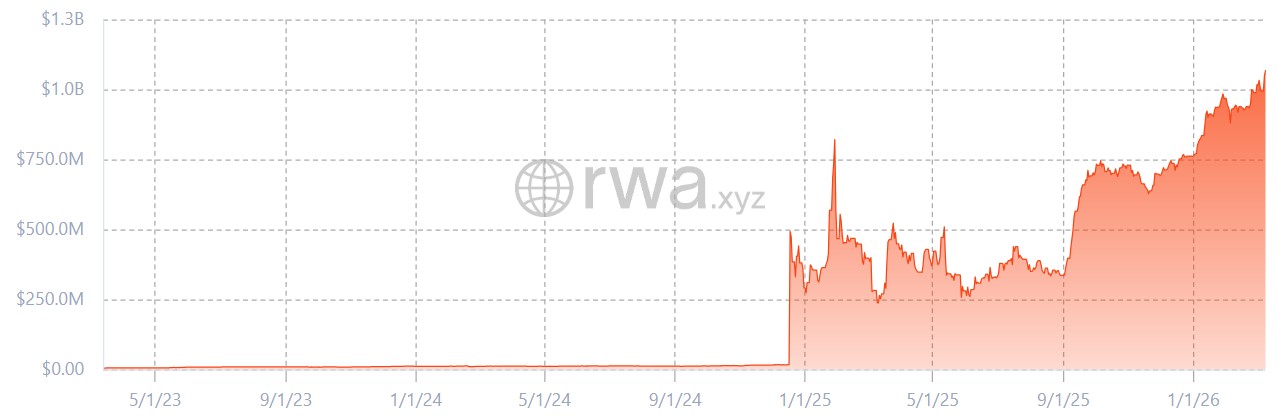
The tokenized stock sector’s market cap in 2023-2026. Source: RWA.xyz.
This kind of momentum isn’t driven solely by easier access to the stock market. In practice, stock tokenization unlocks capital — your exposure is no longer an isolated entry locked inside a brokerage system and instead gains utility.
The lion’s share of the tokenized stocks market — about 25% of the total value and around 17% of the user base, as of early March 2026 — belongs to xStocks, an equity and ETF tokenization platform launched by Backed Finance. In this piece, we will break down how the project works and use it as a lens to explore the exact opportunities tokenized stocks unlock for investors.
On-Chain: Why It Is a Better Way to Hold Stocks
The biggest misconception about tokenized equities is that their primary function is just 24/7 access to the stock market.
In reality, the key upgrade lies elsewhere: the ability to freely transfer assets outside legacy brokerage systems, composability within the DeFi ecosystem, and their use as collateral.
This is why tokenized RWAs are gaining recognition not exclusively as a way to “buy a familiar asset on-chain,” but as a more efficient financial primitive. Your portfolio begins to serve as a base layer for liquidity, leverage, collateralization, and yield strategies.
Of course, it is also worth keeping in mind the gains in baseline efficiency. On TradFi rails, transferring rights to a security is burdened by clearing delays and brokers’ siloed databases.
Stock tokenization solves this by letting assets settle freely on-chain, and often removing the need for external intermediaries to service trades. You gain the ability to instantly move capital across wallets or protocols, skipping traditional bottlenecks. Asset transferability is no longer bound by Wall Street hours.
What Is xStocks and How Does It Work?
xStocks is a suite of tokenized stocks and exchange-traded funds (ETFs) introduced by Backed Finance in May 2025. Importantly, these aren't literal "stocks on the blockchain." Instead, they are tokenized representations of securities, fully backed 1:1 by the underlying assets.
As of early March 2026, xStocks are held by over 86,000 users, with the aggregate market cap of tokenized stocks issued on the platform approaching a $250 million mark.
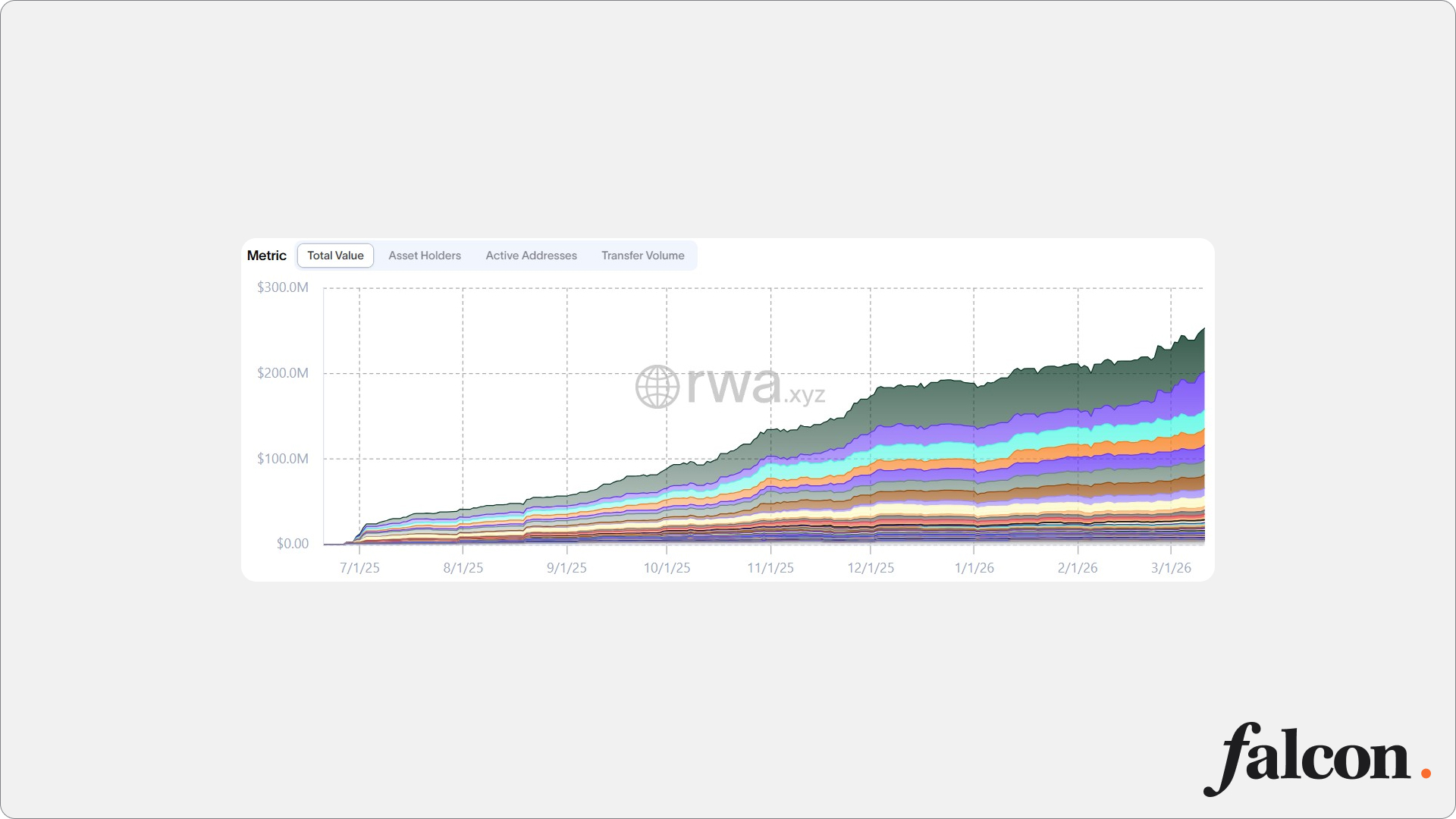
The aggregate market cap of the xStocks platform by asset. Source: RWAxyz
From a legal and financial standpoint, each xStocks stock token is structured as a tracker certificate that closely tracks the price of the underlying security. This leads to a key nuance that users often miss: in this case, tokenization provides economic exposure to the underlying asset, but it does not confer direct share ownership or grant holders voting rights.
Accordingly, this also affects how corporate actions are handled. In particular, dividends are not paid directly to the user’s wallet but are instead reinvested in the value of the underlying asset. As a result, the value of xStocks increases proportionally, representing the security’s actual return. Chainlink oracles monitor and verify these corporate events.
This mechanism removes friction from capital flows and makes the tokenized stock programmable — it becomes a fully composable asset that can be smoothly integrated into any DeFi protocol.
How Traditional Equities Become xStocks
As you have likely gathered, the core idea behind xStocks is extremely simple. Securities are packaged into tokenized wrappers that any wallet from an eligible jurisdiction can buy, hold, and use. That said, the mechanics under the hood are a bit more complex.
To start, the issuance of new tokens and their redemption for a fiat equivalent are available only to authorized participants that have completed the issuer’s KYC/AML process. Their addresses are added to a whitelist, after which they can interact with the platform.
In this setup, three mechanisms determine exactly how issuance and redemption take place:
- Market Flow. The user deposits stablecoins, the issuer purchases the asset through a broker, and then mints the token.
- xChange. This is an atomic request-for-quote (RFQ) mechanism that allows users to swap stablecoins for xStocks and vice versa at a pre-set quote. The trade settles via a single atomic transaction — it either executes entirely at the quoted price or fails completely.
- xPort. This is an in-kind issuance and redemption process, meaning there is no intermediate cash-out step. Put simply, the mechanism allows traditional equities to be converted into tokens and back on demand. Today, xStocks supports this route through Alpaca.
Across all scenarios, the underlying assets are acquired on the traditional market and held in accounts with regulated brokers and custodians.
Once minted, xStocks can be transferred, held, and traded on supported venues without direct interaction with the issuer. This is exactly where tokenized stocks begin to function as true on-chain assets.
What Tokenized Stocks Can You Buy Through xStocks?
The xStocks product line features tokenized representations of public equities and ETFs, ranging from Big Tech to indices. The most liquid assets are Tesla, Circle, and NVIDIA shares, with demand concentrated around familiar tech names.
Indices are gaining traction too. As of early March 2026, SPYx, a tokenized version of one of the most widely held U.S. equity index funds, ranked third across the entire product lineup by number of holders.
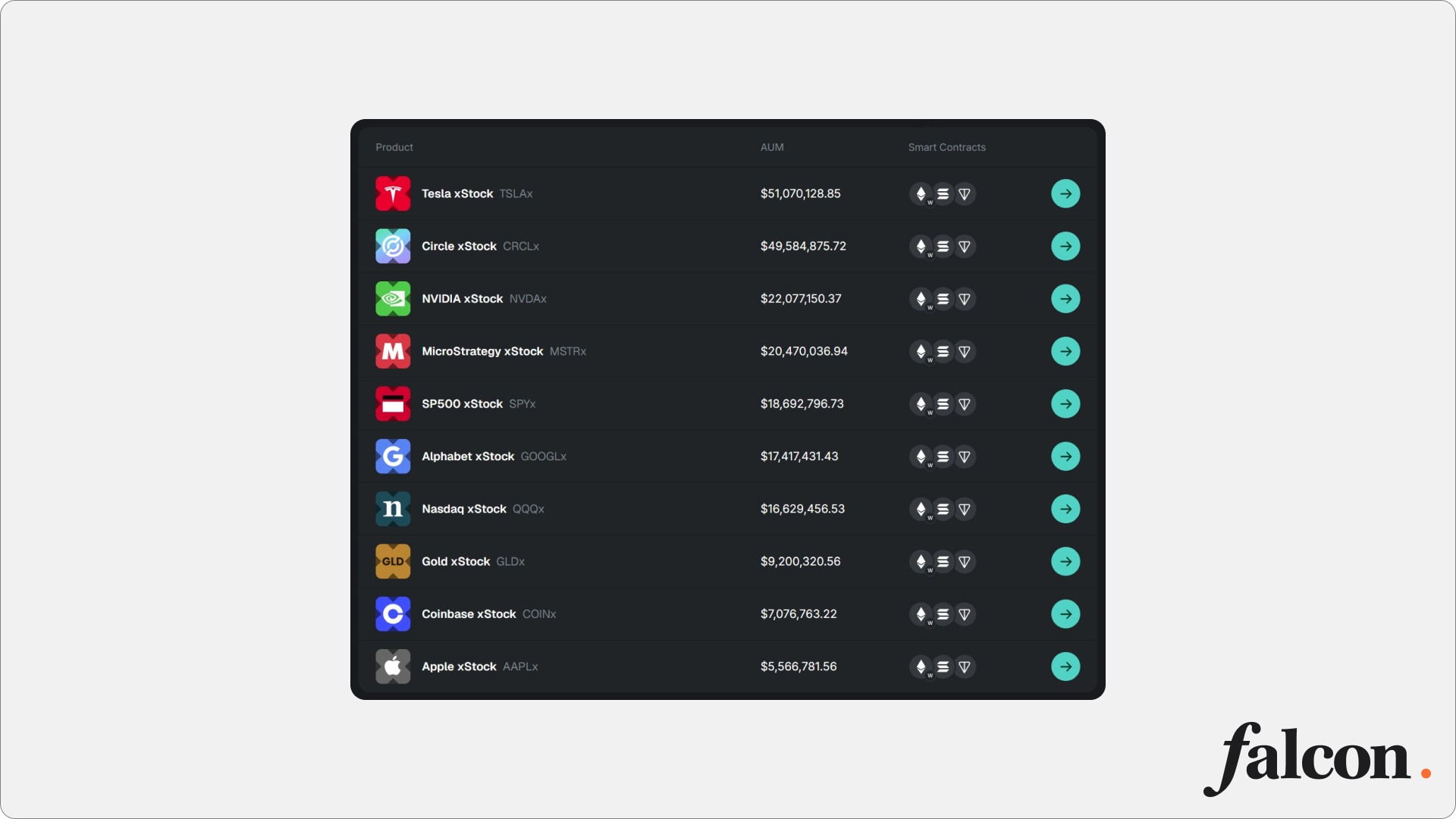
Largest tokenized stocks by assets under management (AUM) on xStocks. Data as of March 12, 2026. Source: xStocks
Users can acquire xStocks through partner venues within the ecosystem. Specifically, the tokens are available on centralized exchanges like Kraken and Bybit, decentralized platforms such as Jupiter and Raydium, and directly via several crypto wallets, including Trust Wallet.
The Backbone of xStocks
As noted above, xStocks was developed by Swiss company Backed Finance, which provides the infrastructure behind the standard. Meanwhile, a separate entity — Backed Assets (JE) Limited, registered and licensed in Jersey — handles the actual minting and redeeming of the tokens.
In the EU, the product is regulated by the Liechtenstein Financial Market Authority (FMA) and is not available to U.S. users.
xStocks debuted in June 2025 with support from Kraken and Bybit, which gave their users access to these tokenized equities. The partners also said they intended to make this mechanism an industry standard.
To that end, they launched the xStocks Alliance, a coalition of companies and organizations working to prevent liquidity fragmentation and the duplication of the same securities.
In December 2025, Kraken announced its acquisition of Backed Finance. The crypto exchange explained that the deal allowed it to natively integrate the minting and settlement of tokenized stocks directly into its own infrastructure.
How Falcon Finance Brings Additional Utility to the xStocks
In practice, tokenized stocks unlock real value when they start working within crypto and DeFi infrastructure. That's why Falcon Finance partnered with Backed to integrate xStocks into its collateral framework.
As a Falcon Finance user, you can deposit xStocks tokens like NVDAx, MSTRx, SPYx, and other supported instruments as collateral to mint USDf, Falcon's synthetic dollar. From there, you can stake USDf to earn protocol yield. Collateral is returned when you close your position.
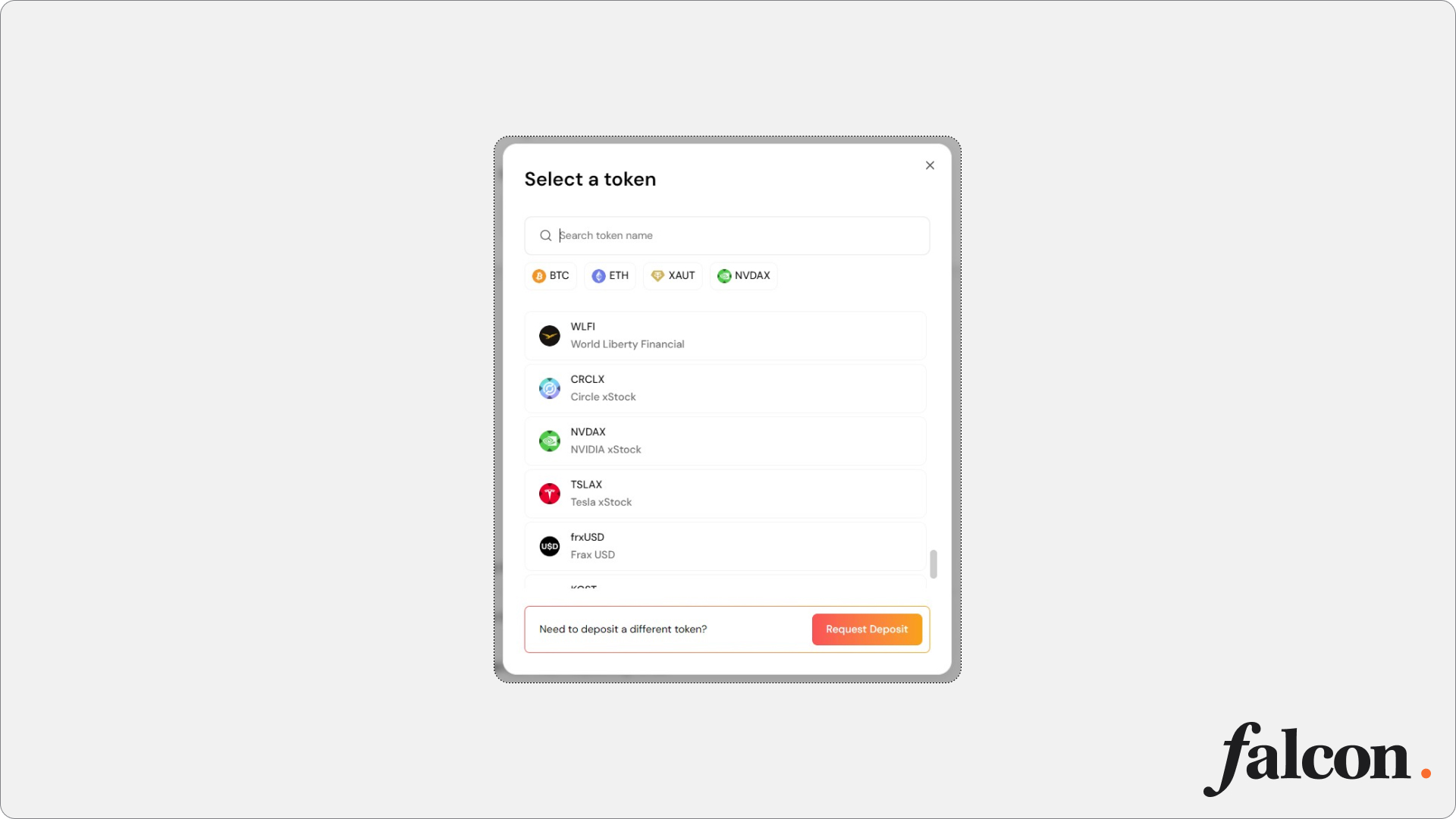
A fragment of the list of digital assets, eligible for depositing to Falcon Finance
It's a pragmatic setup: you don't need to sell your SPYx or any other tokenized stock to access liquidity. Instead, you lock tokenized RWAs in a smart contract, open a collateralized debt position, and put that capital to work across DeFi.
Falcon also offers tokenized stock holders a way to earn extra yield without giving up their holdings. The SPYx Staking Vault, for example, lets you hold a tokenized version of a widely held equity index fund while accruing around 3% APR (rate can vary) on top of the underlying price performance. SPYx stays locked for the full term, and vault rewards are paid regularly in USDf.
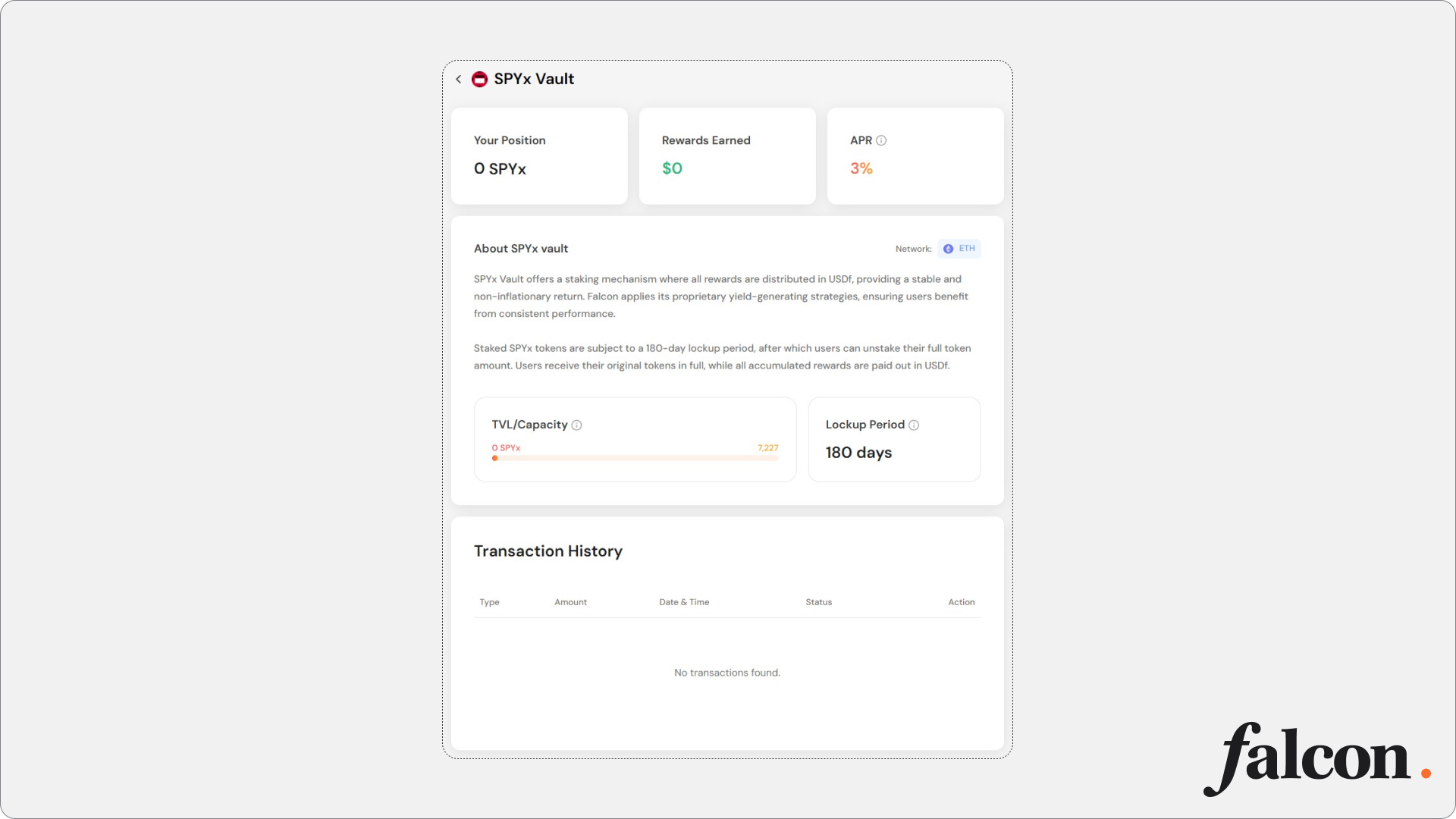
A part of SPYx staking vault's interface in Falcon Finance
By locking tokens in the Falcon Finance vault, you put passive capital to work. With the SPYx vault specifically, there's no need to hunt for the right strategy or monitor collateral ratios. You deposit, lock, and earn.
Final Thoughts
In just over two months since the start of 2026, the total supply of xStocks has rose by 26%. The product has clearly found its market, and tokenized equities are becoming an organic part of the onchain capital ecosystem.
The core value: your stock market exposure becomes composable with Web3. That unlocks capital efficiency and opens up new ways to earn yield on otherwise passive holdings.
But composability alone isn't enough. Without protocols that can integrate RWAs into real utility layers (collateral, vaults, lending), the flexibility is theoretical. That's where Falcon Finance fits in, and why infrastructure like this is critical to the sector's growth.
This is one of the clearest convergence points between capital markets and onchain finance. Worth watching, and even better, trying for yourself.