July 2026: Collateral Unlocks USDf, and Falcon Card Makes It Spendable
Published • 31 Jul 2026
3 mins
.jpg%3Fprefix%3Dmedia&w=3840&q=75)
We spent July closing the loop between collateral and everyday spending. Users can already mint USDf against eligible crypto and tokenized assets, then stake that USDf into sUSDf for yield. Falcon Card, launched on July 20, adds the final step: that liquidity can now move beyond the wallet and into online and in-person spending.
USDf & sUSDf Updates
As of our Transparency Dashboard capture on July 31, USDf supply sits at $1.26b with $60.6m in sUSDf (staked USDf). Total reserves are $1.40b, putting the backing ratio at 111.1%.
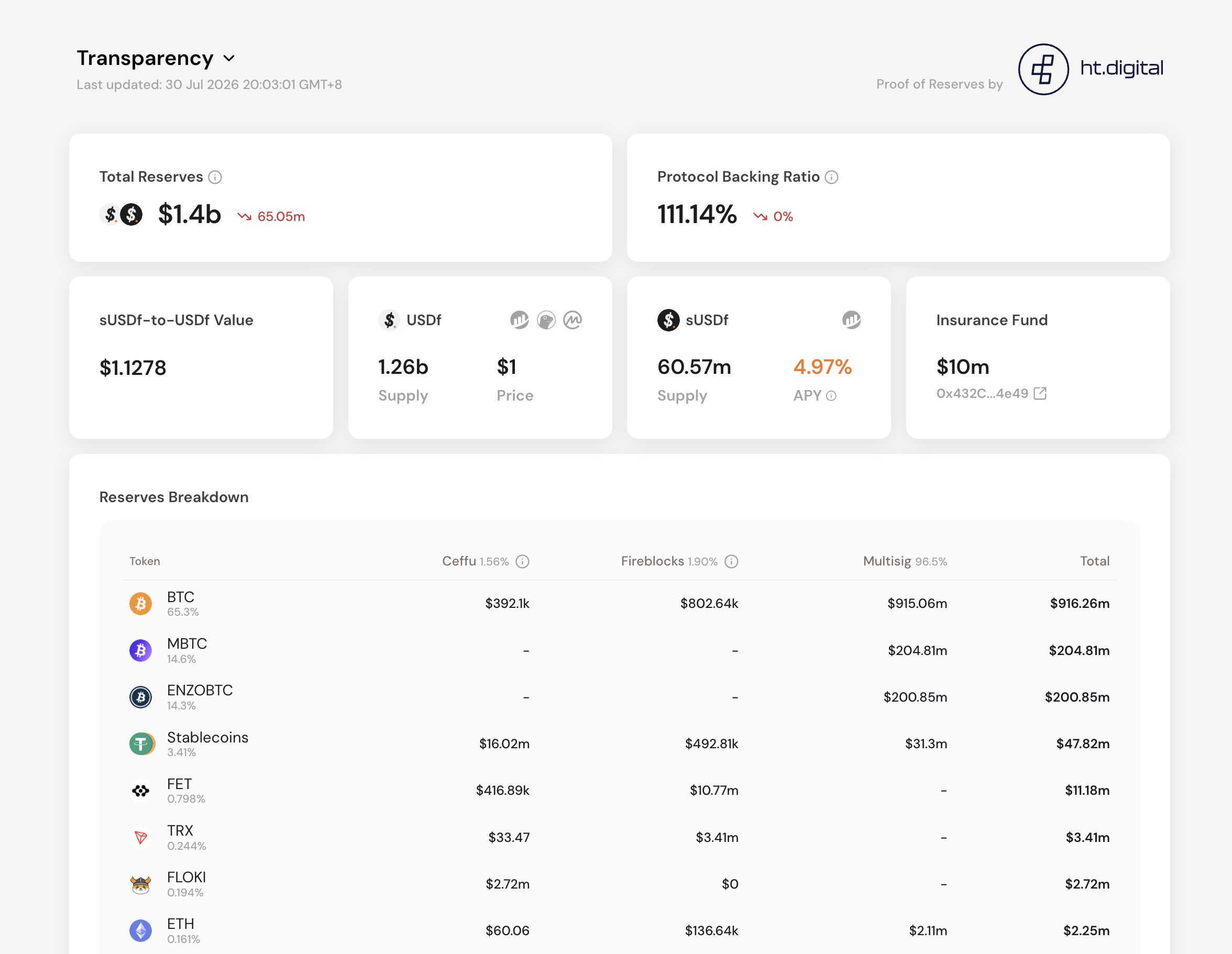
- Reserve exposure remains led by BTC at about 65% (~$916m), followed by mBTC at 14.6% and enzoBTC at 14.3%, with the rest across stables and select crypto.
- Yield generation is still anchored by options-based strategies at 61%, with positive funding farming and staking at 21%, and smaller contributions from statistical and cross-exchange arbitrage.
Key Announcements
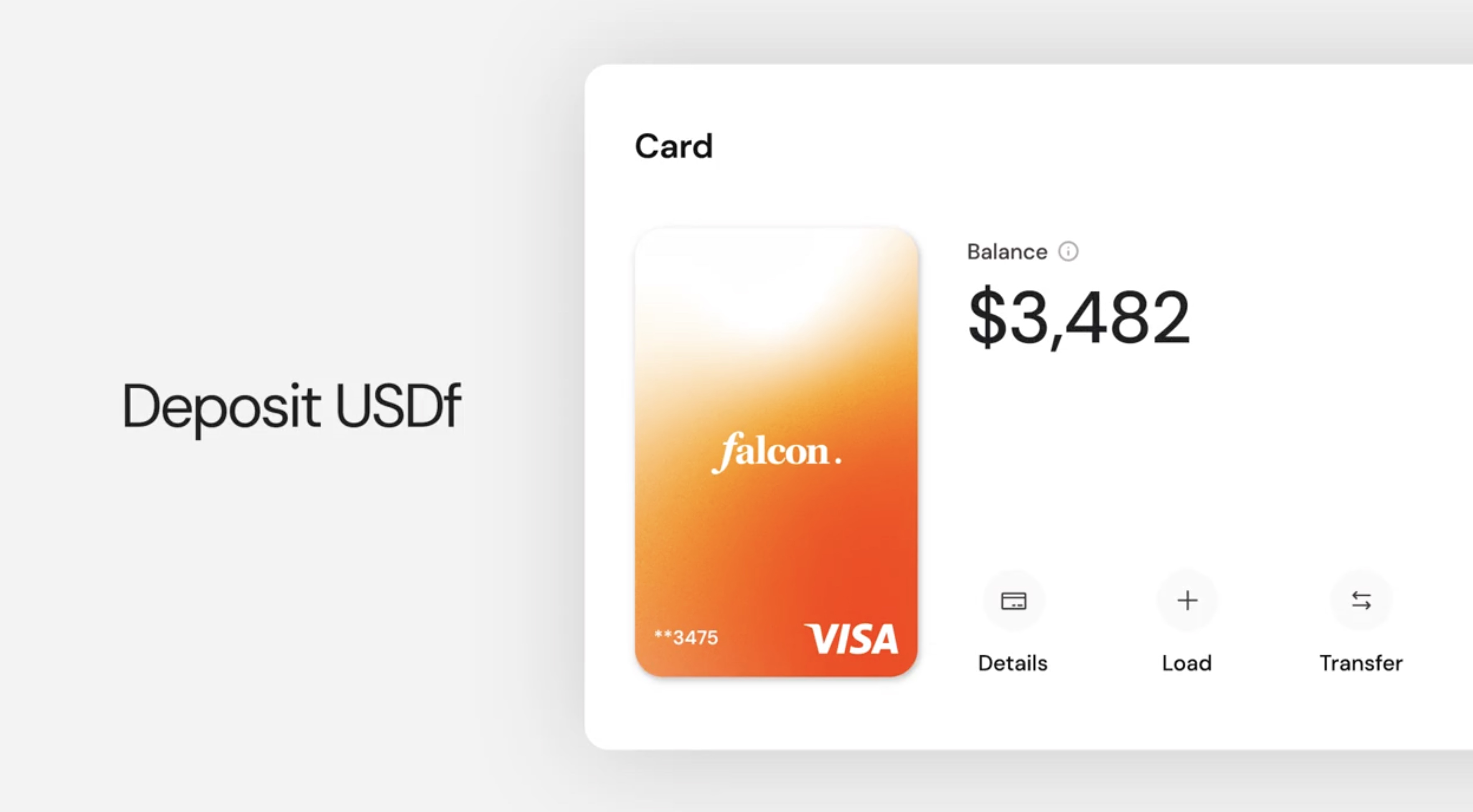
On July 20, we launched Falcon Card for eligible verified users. Users can mint USDf against supported collateral or acquire it in secondary markets, then load it for online and in-store payments, including through supported mobile wallets. There is no annual subscription fee or extra Falcon fee beyond applicable FX-related charges.
Spending availability across 90+ jurisdictions
We published the full supported-country list across Europe, Asia-Pacific, the Americas, Africa, and the Middle East, with some markets currently limited to corporate customers. Applications are open at app.falcon.finance/card. We’re continuing to expand coverage, so please reach out to our team on Discord with any questions or if you need support.
Ecosystem Growth and Partnerships
Supported USDf collateral
Through integrations spanning Tether Gold, Superstate, Centrifuge, Etherfuse, Ondo Global Markets, and xStocks, supported USDf collateral now includes:
- BTC, ETH, SOL, and select crypto assets
- Stablecoins, including local-currency stablecoins
- Tokenized gold
- Tokenized U.S. government securities and Treasury funds
- Tokenized AAA CLOs and investment-grade credit
- Tokenized stocks and S&P 500 exposure
- Tokenized emerging-market government debt
You can unlock USDf liquidity against these eligible assets and then put it to work across DeFi, stake it for sUSDf, or spend it online and in person through Falcon Card.
Community & Campaigns
Falcon Miles Season 2 and card activity
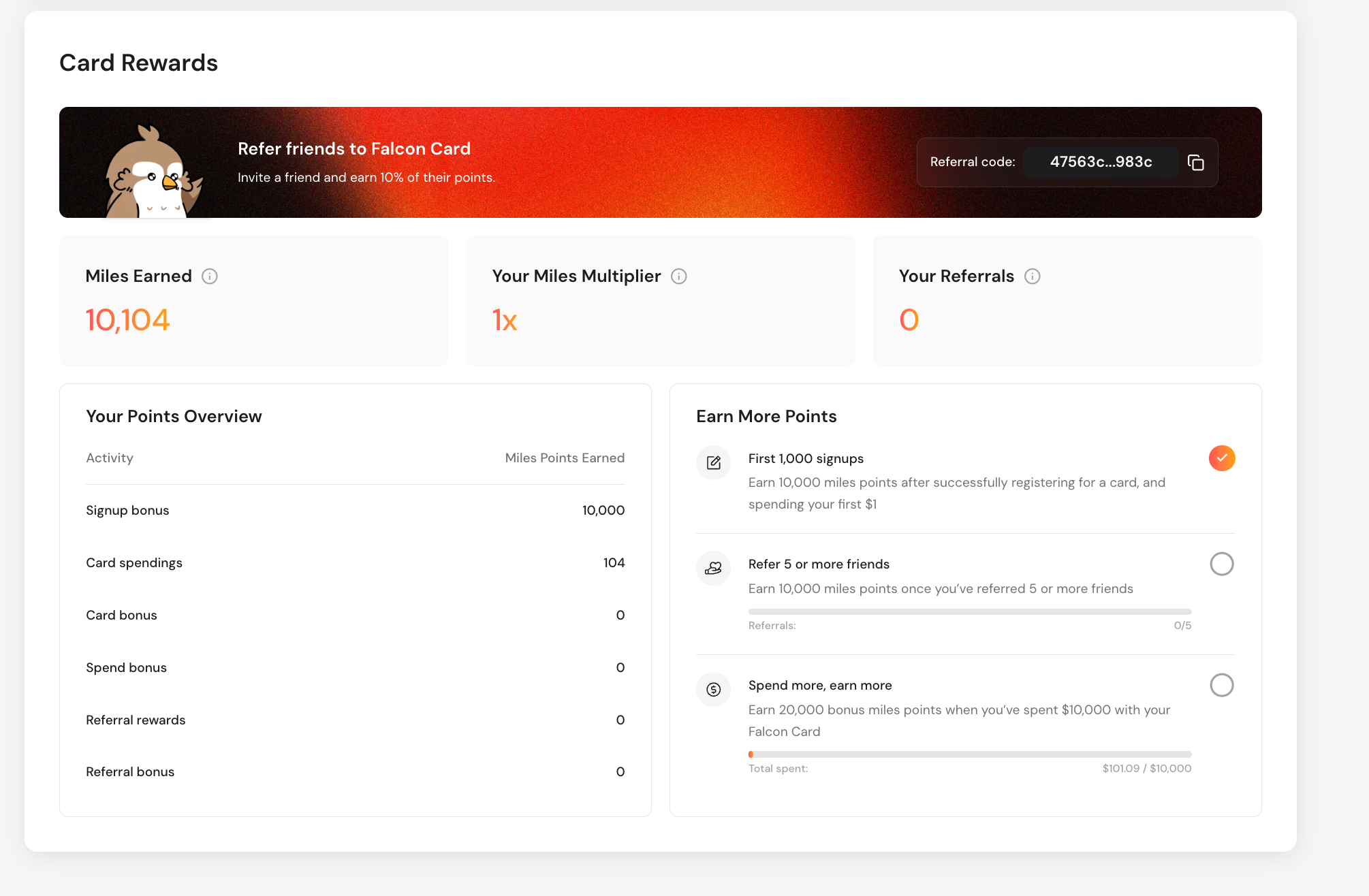
Falcon Miles Season 2 now rewards Falcon Card activity too. Users can earn Miles while putting USDf to work in everyday payments.
Insights, Media and AMAs
Why tokenized RWAs must work as collateral
On July 2, our Chief RWA Officer Artem Tolkachev joined Stabledash Live. The recap we published the next day makes the thesis clear: tokenization is the back-end engine; collateralization and liquidity are the product. Artem also broke down USDf and fUSD as two dollars for two jobs: DeFi-native overcollateralized liquidity and yield on one side, Anchorage-issued regulated venue rails on the other, and explained why idle tokenized assets fail the usefulness test.
Two engines, multi-chain RWAs, and a wider collateral map
Mid-month, we mapped the market shifts we are building into. Treasury and RWA-backed products now sit roughly alongside DeFi-native products in yield-bearing stablecoin TVL. Distributed RWA value has continued to set all-time highs, with stocks and credit gaining share and growth spreading beyond Ethereum. Falcon Card adds a spending layer to that expanding collateral market.
What's Next?
July closed the loop from collateral to spendable USDf. Next, we will widen where Falcon Card is available, keep onboarding collateral that can mint and circulate, and deepen the dual-rail path so institutions and DeFi users get the dollar that fits their needs. USDf reserves stay visible on the Transparency Dashboard, as always, and we will keep building in the open.