Yooldo Games Explained: Ecosystem, Blockchain, ESPORTS and Ways to Earn
Updated • 23 Dec 2025
Published • 25 Dec 2025
8 mins

Summary
- Yooldo Games is a multi-chain esports and GameFi platform by Catze Labs that aims to deliver a “Web2 gaming hub” experience while running NFTs, tokens, and governance under the hood.
- The ecosystem spans Yooldo Verse (gas-free L2 on Oasys for gameplay) and Linea (zkEVM L2 for on-chain assets, quests, and liquidity), with Consensys backing Yooldo as a GameFi partner on Linea.
- Core titles include Trouble Punk: Cyber Galz (battle-royale esports loops with league matches and a “Jury DAO” anti-abuse system) and Random Pirate Defense (mobile tower defense with optional NFT ownership and upgrades).
- ESPORTS, a BEP-20 token on BNB Chain, ties the platform together as a payments, rewards, and governance asset with inflation-resistant tokenomics.
- Falcon Finance launched staking vault for ESPORTS in December 2025: it enables locking Yooldo Games tokens for 180 days to earn weekly yield in USDf with 20-35% APR.
Introduction
Built as a multi-chain esports and GameFi platform, Yooldo Games plugs casual and competitive players into an on-chain economy while striving to keep the blockchain friction in the background. In this article, we explore what games and titles are being built within this GameFi ecosystem, how they fit into a shared token and governance layer powered by the ESPORTS token, and, finally, how ESPORTS holders can earn from this crypto asset.
Yooldo Games Platform: Web2 Feel, Web3 Tech
Yooldo is a multi-chain Web3 gaming platform designed by Catze Labs to feel like a regular gaming hub, with a CEX-style interface on the surface and NFTs, tokens and DAOs under the hood.
The name “Yooldo” comes from a utopian country in a classic Korean novel, a place built on fairness and opportunity. That story is used as the brand’s central narrative: anyone should be able to jump in, play, and compete on fair terms, whether or not they arrive with crypto experience.
To deliver on that promise, Yooldo runs on more than one chain. Gameplay itself can live on Yooldo Verse, a gas-free Layer-2 built on the Oasys gaming chain, where the verse operator covers gas so players don’t have to think about fees at all. In parallel, Yooldo leans into Linea, a zkEVM Layer-2 chain for Ethereum built by Consensys with low fees and full EVM compatibility, as its primary public infrastructure for on-chain assets, quests and liquidity.
Yooldo is de-facto the largest GameFi platform on Linea, backed directly by funding from Consensys.
Yooldo Games: Main Titles
Trouble Punk: Battle Royale as an Esports Lab
Yooldo’s flagship title, Trouble Punk: Cyber Galz, is the main showcase for its approach to Web3 gaming.
It’s a battle-royale-style action game where players drop into compact maps, search for weapons and items, and race to rack up the most points within a short time limit. Up to eight players can join a match, the one who survives and scores best when the clock runs out becomes the winner.
The game’s visual style is deliberately friendly and dynamic: round, stylized characters with over-the-top weapons, fast five-minute rounds, and a mix of casual and skill-based elements that feel closer to a small-team brawler than a battle royale.
Apart from the free-roaming, there’s a league play: users join scheduled league matches, pay an entry fee, and compete for a shared prize pool, with rewards distributed based on final ranking.
Originally launched on Yooldo Verse on Oasys, nowadays the game mostly runs as a Linea dapp. In practice, that means a player can fight and progress in what feels like a traditional PC game, while ownership of items, tournament logic and reward distribution increasingly sit onchain. There’s the anti-abuse system, often referred to as a Jury DAO, that lets players request a review when they suspect cheating. Other users act as jurors, examine evidence and vote. Smart contracts handle rewards and penalties.
Random Pirate Defense: Mobile Tower Defense with NFTs
Yooldo’s second official title, Random Pirate Defense (RPD) is a free-to-play blockchain tower defense game for mobile devices, in which players summon pirate and mercenary units to protect their ship from waves of sea monsters. Currently, the game is released for Android in Google Play in beta testing mode.
In RPD, you play as the captain of a pirate ship, holding off waves of sea monsters by summoning pirates who act as your towers. Defeating enemies earns you gold, which you use to bring new crew onto the deck, strengthen existing units, and hire mercenaries as you clear tougher stages.
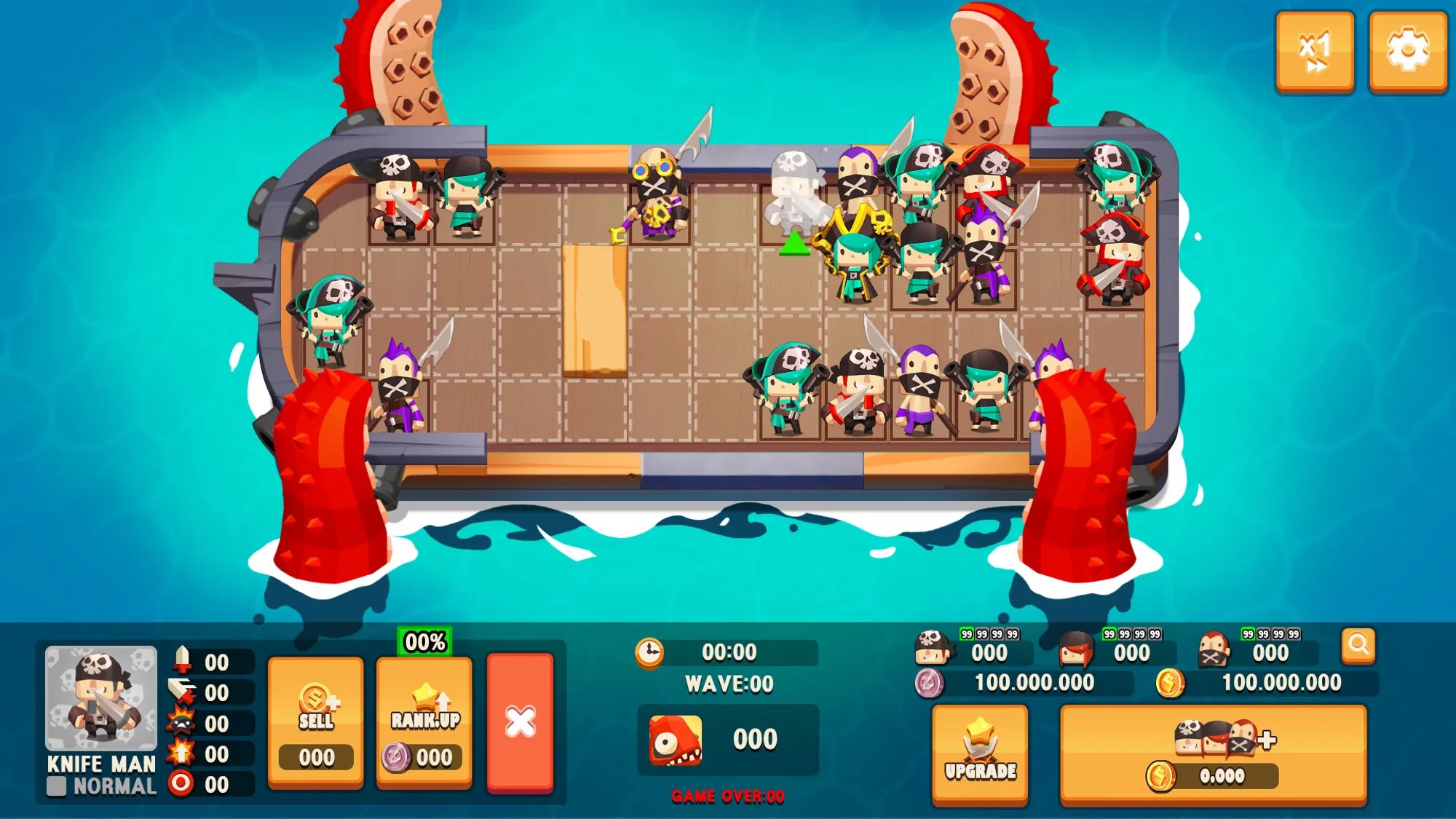
RPD is built to work both as a simple free-to-play mobile game and as a Web3 experience, depending on how deep you want to go. Partnership NFTs can become in-game mercenaries, and high-grade “Relic” mercenaries can be converted into NFTs while keeping their skills and stats intact, so committed players can truly own and trade their best units.
Your captain account also grows over time, unlocking token and seasonal rewards and, if you choose to mirror it onchain, becoming an asset in its own right, though blockchain integration remains completely optional for those who just want to play.
Yooldo, NFTs and Linea: How They Fit Together
Underneath the games in Yooldo, there are two main blockchain layers to understand that power this GameFi ecosystem: NFTs as the building blocks of ownership, and Linea as the blockchain network that keeps everything fast and affordable.
Linea acts as a public Layer 2 for assets and scaling across the Yooldo platform. It is a zkEVM rollup that batches transactions off-chain and posts cryptographic proofs back to Ethereum, which means lower fees and faster finality while staying fully EVM-equivalent. Consensys has publicly backed Yooldo as a GameFi partner on Linea, so a growing share of in-game assets, quests and rewards now live on this stack.
On top of that, Yooldo has its own view on how NFTs should be used and protected. Rather than pushing players into classic “stake your NFT in a contract” models, the platform introduces what it calls “Proof of NFT Zestful Incentive”, essentially an incentive system for holding NFTs safely in your own wallet instead of locking them away.
High-value NFTs come with real risks when staked: contracts can be hacked, airdrop campaigns can be abused through phishing, and if a bad actor gains control of a collection, they can dump it on the market and distort prices.
Yooldo’s answer is simple: you don’t have to surrender custody of your NFTs to be rewarded. The platform tracks how long users hold eligible NFTs in their wallets and grants benefits based on that holding period. If you keep your NFTs for a set period, for example a month, you can unlock special perks, in-game boosts or other rewards without ever sending those assets to a sta
ESPORTS: Token that Ties Yooldo Games Together
Issued on BNB Chain as a BEP-20 token with a maximum supply of 900 million, ESPORTS is used in the Yooldo GameFi ecosystem for:
- payments, for example, tournament entries and certain marketplace activities);
- earning, e.g., as a reward for winning in tournaments and engagement;
- as a governance asset for voting to influence future decisions of the platform.
On the tokenomics side, ESPORTS is inflation-resistant: the fixed max supply, staged vesting schedules and emphasis on real fee revenues from games are meant to avoid the endless emission curves of earlier play-to-earn projects.
How to Earn on ESPORTS Holdings with Falcon’s Staking Vault
In the beginning of December 2025, Yooldo partnered with Falcon Finance to launch a staking vault for ESPORTS. It is built for long-term holders who want to keep full upside exposure to ESPORTS while earning a predictable, stable yield on top: Falcon Finance pays a stable return in USDf, its synthetic dollar, so the yield is not directly exposed to token price swings.
Using the vault is simple. You connect a wallet with ESPORTS tokens, choose an amount to stake, and confirm the transaction. Those tokens are then locked for 180 days, during which you accrue daily yield in USDf that can be claimed every week from the vault page. The vault accepts deposits until it reaches a hard cap of 25 million ESPORTS, which keeps the size of the program controlled.
At the time of writing, ESPORTS vault’s APR stood at 20%. It means that, for a deposit worth $1,000 in ESPORTS, you would earn roughly $98 over a 180-day lockup period, all paid in USDf while your original ESPORTS position stays intact. Your locked tokens’ value and APR vary over time, but the core idea remains: use a staking vault to make idle ESPORTS productive.
Closing Thoughts
Yooldo ties gameplay, ownership, and yield into one economy. Players can start with simply playing main ecosystem titles like Trouble Punk or Random Pirate Defense, and earning through tournaments, rewards, and on-chain assets that actually belong to them. Those who go deeper can consolidate that value in ESPORTS, the token that connects games, governance, and broader ecosystem activity. And for long-term investors and GameFi believers, the ESPORTS staking vault on Falcon Finance adds a final layer, turning idle tokens into a dollar-based yield while keeping full upside exposure to the token itself.